Best Formaldehyde Removal in Singapore: 9 Services, Real Prices (2026)

Published 14 July 2026
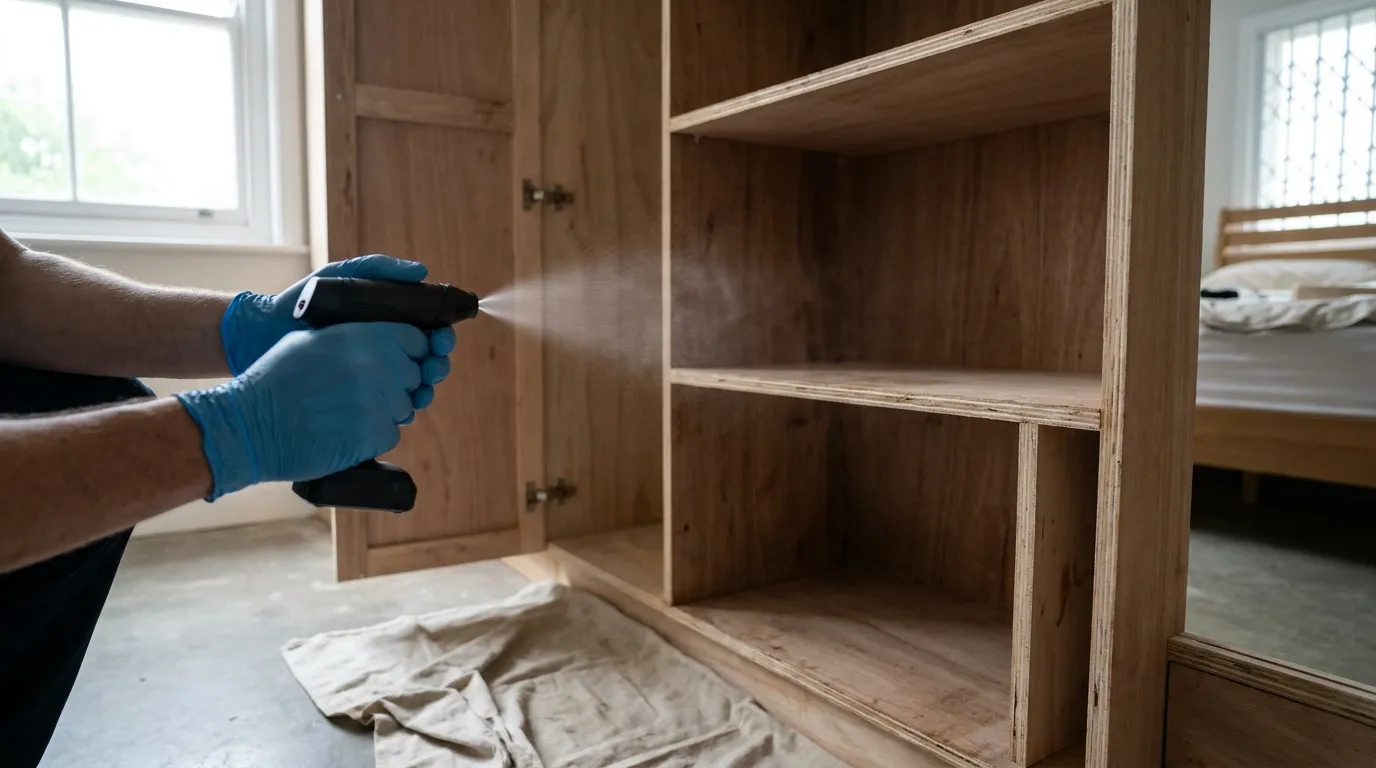
Search for formaldehyde removal in Singapore and the top result isn’t a company — it’s a Reddit thread asking whether these services work at all. Fair question. The smell in your new carpentry is urea-formaldehyde glue in the plywood, it off-gasses for one to two years, and an industry has grown up around making it go away in an afternoon — one big enough that CNA’s Talking Point devoted an episode to why formaldehyde levels in Singapore homes are rising. We read the published price lists, method pages and fine print of nine companies in July 2026. We haven’t booked them; what we’ve done is the homework: only four of the nine print a price, two of those four print the same price table, and one company’s “cost per square foot” page contains no costs. Here’s what we found — including what the science says these treatments can and can’t do.
What it actually costs (4-room HDB, ~1,000 sqft)
| Service | 4-room HDB price | Pricing unit | Prices published? |
|---|---|---|---|
| King of Formaldehyde | S$350 | By flat type; condo ~S$0.50/sqft | Yes — full rate card |
| DW Formaldehyde Removal | S$480 promo (list S$600) | By flat type, fixed carpentry scope | Yes — full rate card |
| Superclean | ~S$525 | By floor area, 8 bands | Yes — full table |
| Bemitey Clean | ~S$525 | By floor area — identical table to Superclean’s | Yes — full table |
| Sureclean | quote only | — | No — even their “cost per sqft” page has no prices |
| CleanQ | quote only | — | No |
| Lumiair | quote only | — | No |
| HomeCleanHome | quote only (S$100 off first treatment) | — | No |
| Clean Lab | unpublished add-on to post-reno cleaning | — | No |
Prices are the companies’ own published rates as of July 2026. The only buyer figure we found in the wild: one Reddit user paid about S$1,400 for a deep clean plus formaldehyde treatment and estimated the result at “70%.”
What you’re buying — and what the evidence says
Every company on this list sells some combination of four things:
- Sealing coats paint the raw, off-gassing surfaces — cut edges, cabinet backs — so less formaldehyde escapes. This is real source control, and the most defensible thing on the menu. It’s also why a “whole house misting” that never touches the inside of your carpentry is treating the air, not the source.
- Photocatalytic (TiO2) mists break formaldehyde down — when the coating gets light. Lab results are genuinely good; the inside of a closed wardrobe is genuinely dark. US EPA reviews also note incomplete photocatalytic oxidation can generate its own byproducts. If a company sells photocatalyst, ask what happens inside closed cabinets — it’s the question the whole pitch turns on.
- Air scrubbing (HEPA plus activated carbon) removes what’s already in the air, and works — while the machine runs and the carbon is fresh. It does nothing to the plywood that refills the room after the crew leaves. The same principle, minus the crew, is a consumer air purifier with real carbon.
- Ozone kills smells and is itself a lung irritant — the US EPA advises against ozone generators in occupied spaces. One company on this list names an ozone generator as its equipment. We’d keep looking.
The physics nobody’s brochure mentions: the US EPA puts the off-gassing half-life of pressed-wood products at 1.5 to 2 years, decaying steadily — no afternoon visit rewrites that curve. What a good service can honestly do is knock down the acute spike, seal the worst-emitting surfaces, and give you numbers. What none of them can do is finish two years of chemistry in four hours — which is why the free competitor, heat plus ventilation plus time, remains undefeated on Reddit. We’ve written up how to do the DIY route properly, including the cookout method and what to skip.
One more number to know: the WHO indoor guideline is 0.1 mg/m³ (0.08 ppm) — the same figure Singapore’s SS 554 code applies to air-conditioned buildings and the benchmark several companies here treat as “pass.” From January 2026, NEA banned formaldehyde-added interior paints; nothing yet regulates the plywood in your carpentry, which is where the smell actually lives.
Rank 1:King of Formaldehyde(external site)
Price: 4-room HDB: S$350; condo ~S$0.50/sqft
The only specialist that publishes its complete rate card: S$280 for a 2-room flat up to S$450 for a 5-room, condos at roughly S$0.50/sqft, and three package tiers if you want more or less than the standard treatment. The method is the right shape — a sealing coat brushed onto carpentry backs before mounting where possible, plus a TiO2 mist — and they’ll do a free formaldehyde reading first (remember whose meter is finding the problem). The caveats: the certificates on the site are images with no readable issuer, the product name changes between pages, and the one published case study is their own number. At S$350 for a 4-room, this is the published price everyone else has to beat.
Verdict: Best value if you want a specialist that prints its full rate card.
Rank 2:DW Formaldehyde Removal(external site)
Price: 4-room HDB/BTO: S$480 (promo; list S$600)
DW publishes a genuine rate card — S$288 to S$560 across HDB and condo sizes, currently framed as a “20% limited-time promotion” off list prices (promotions that never end are a pricing strategy, not a discount). Pre- and post-treatment readings are included, and their walkthrough of the process is the most detailed of the nine. Two things to read before you WhatsApp: the BTO package covers a named list of carpentry — kitchen cabinets, one wardrobe, one TV console — not your whole home; and levels above 0.08 ppm trigger an “enhanced solution” with no published price. The “98% reduction” claim comes with no named lab behind it.
Verdict: Clearest package pricing — but read the list of what the package covers.
Rank 3:Sureclean(external site)
Price: Quote only
Sureclean is the contradiction on this list: the worst price transparency — a page literally titled “Formaldehyde Removal Treatment Cost Per Sqft Singapore 2026” contains not one price — and the best paper trail. They’re the only company committing in writing to a 30-day follow-up check, with before-and-after readings and clearance documentation, on top of catalytic spraying plus HEPA-13 air scrubbing. A 15,000-job operation that also made our mattress cleaning comparison. If rebound worries you more than quote friction does, this is the strongest written commitment in the market. Get the total in writing; there’s a 2-hour minimum service window.
Verdict: The only written 30-day follow-up in the market — and no published prices.
Rank 4:CleanQ(external site)
Price: Quote only
No prices anywhere — you WhatsApp for a quote. What CleanQ publishes instead is the thing everyone else leaves vague: the chemistry. Their three-series TiO2 coating is named, tiered, and certified by bodies they actually identify — SGS and Japan’s Photocatalysis Industry Association — and they commit to a handover standard of 0.08 ppm with a post-treatment report. They’re also upfront that you should keep ventilating for seven days after treatment, which quietly concedes the point most competitors gloss over. If you’ve decided to buy a coating treatment and want to know what’s actually in the sprayer, this is the best-documented option.
Verdict: Best-documented chemistry (SGS, PIAJ) if you can live without a rate card.
Rank 5:Superclean(external site)
Price: S$400–1,025 by floor area (4-room: ~S$525)
Superclean’s eight-band table is the fullest floor-area pricing published — S$400 under 500 sqft to S$1,025 at 3,000 sqft, stated as all-inclusive: baseline testing, treatment (photocatalytic oxidation plus source sealing on raw wood edges), and post-verification against the 0.1 mg/m³ benchmark, with the team staying “until air metrics fall below safe levels.” Two asterisks we can’t un-see: the page’s browser title advertises “From $3/sqft” while the table works out to S$0.13–0.34/sqft — the number appears nowhere in the content — and the table itself matches Bemitey Clean’s dollar-for-dollar (more on that below). The rates are fair; the packaging earns a raised eyebrow.
Verdict: Flat, all-inclusive rates — mind the gap between the headline and the table.
Rank 6:HomeCleanHome(external site)
Price: Quote only; S$100 off first treatment
HomeCleanHome publishes starting prices for every service it offers — general cleaning from S$280, post-reno from S$350 — except this one, where the only number is a S$100-off first-treatment promo. The method (a Japanese photocatalyst applied by ultra-low-volume misting, with SGS and PIAJ certification on the solution) reads much like CleanQ’s, with less documentation. A decade in business and primarily a cleaning company, which is the sensible way to use them: if you’re already booking a post-renovation clean, getting the formaldehyde treatment quoted in the same visit beats paying two call-out charges.
Verdict: Makes sense bundled with the post-renovation clean you were already booking.
Red flags, from the fine print
- Two companies, one price table. Superclean and Bemitey Clean publish the same eight floor-area bands at the same eight prices, S$400 to S$1,025. Neither site mentions the other. We can’t tell you why — but “get three quotes and compare” only works when the quotes are independent.
- Cost pages with no costs. A page titled “cost per sqft” with no prices, and a “$3/sqft” headline above a S$0.34/sqft table, both exist on this list. When the page about price avoids the price, that’s the answer to a different question: how they sell.
- Percentage claims without a lab. “98% reduction” and “minimally 90% reduction” both appear on this list with no named laboratory or report. For contrast, the strongest substantiation we found anywhere was from a DIY product supplier — uCoate publishes 93.83% against a named SGS Singapore test — not from any of the services.
- The meter is the theatre. Every before-and-after reading in this industry comes from a handheld meter, and no company on this list names its instrument. Shanghai’s market regulator tested 41 consumer formaldehyde detectors in a sweep; all 41 failed on accuracy. Ask for the model, the units, and the readings in writing — our testing guide covers which instruments deserve trust.
- Free tests find problems. A free reading is a sales visit — the meter that discovers the problem belongs to the company selling the cure. Use it, but treat the number as an opening bid, not a diagnosis.
Questions to ask before you book
- What is the total for my flat, including GST — and does it cover the whole home or a named list of carpentry? (One package on this list covers exactly three items of furniture.)
- Which instrument takes the before-and-after readings — what model, in what units (mg/m³ or ppm), and do I get the numbers in writing?
- Is the treatment photocatalytic? What happens inside closed, dark cabinets — the place the smell is worst?
- If levels rebound in a month, do you re-treat free — in writing? (Only one company on this list offers a written 30-day follow-up.)
- Which chemical will you use, and can I see the certification documents for that product — the lab’s name, not a logo?
- How long must we ventilate before sleeping here — and if the honest answer is “another week with the windows open,” what exactly did the treatment shortcut?
How we picked
Nine services (plus one DIY supplier), compared on their own published price lists, method pages, and written commitments, checked in July 2026 — no visits, no sponsors, no affiliate links. Where a company publishes nothing, the table says so rather than guessing. Ranking favoured published prices, named certifiers, and promises made in writing over percentage claims made in passing. If the smell you’re fighting is the mattress rather than the carpentry, start with our mattress cleaning comparison — two companies appear on both lists. And if you run a service business where the price only exists on WhatsApp, half this article is about the customers you’re losing — that’s fixable.
Frequently asked questions
Do formaldehyde removal services actually work?
Partially, honestly done. Sealing coats on raw carpentry surfaces are real source control, and air scrubbing lowers levels while it runs. But pressed wood off-gasses with a half-life of 1.5–2 years (US EPA), so no single visit ends it — treatments knock down the spike; heat, ventilation and time do the rest.
How much does formaldehyde removal cost in Singapore?
Among companies that publish prices: about S$280–450 by flat type at the cheapest specialist, up to S$400–1,025 by floor area elsewhere — roughly S$350–525 for a 4-room HDB. Quote-only companies cluster around S$1,000+ once bundled, based on buyer reports.
How long does formaldehyde off-gassing last after renovation?
The US EPA puts the emission half-life of pressed-wood products at 1.5–2 years, strongest in the first months and decaying steadily. Heat and ventilation genuinely accelerate it — which is why airing the flat with fans, cabinets open, remains the most-recommended fix on every Singapore forum.
What is a safe formaldehyde level?
The WHO indoor guideline is 0.1 mg/m³ (0.08 ppm) over 30 minutes; Singapore’s SS 554 code uses the same figure for air-conditioned buildings, and several services treat 0.08 ppm as their handover standard. Treat cheap handheld detector readings as indicative at best — consumer units have failed regulator accuracy tests wholesale.